TRUSTWORTHY INNOVATION, LEARNING, & HUMAN DEVELOPMENT IN THE AGE OF INTELLIGENT SYSTEMS
5th SNAS Interdisciplinary Research Conference
George Mason University (Mason Square), Arlington, VA
October 9-10, 2026
Presenter Registration Deadline: September 25, 2026
All presenters (online or in-person) must register by the deadline for their presentations to be included in the conference program!
Camera-Ready Version (for the Proceedings) Deadline: September 25, 2026
Nature and Scope of the Conference:
We invite scholars, researchers, students, practitioners, and policymakers to submit papers for the 5th SNAS Interdisciplinary Research Conference on “Trustworthy Innovation, Learning, and Human Development in the Age of Intelligent Systems.”
Intelligent systems, including artificial intelligence, machine learning, autonomous platforms, and data-driven infrastructures, are transforming how societies innovate, learn, govern, and develop. As these systems increasingly influence decision-making, safety and security, education, healthcare, economic structures, and civic life, urgent questions arise: How can innovation remain trustworthy? How do intelligent systems reshape human learning and development? What principles should guide the responsible integration of AI into society?
This year’s conference explores the foundations and future of trustworthy innovation, technologies designed with accountability, transparency, resilience, and human-centered values at their core. We seek interdisciplinary contributions that critically examine how intelligent systems can support sustainable human development while safeguarding ethical, social, and institutional integrity.
We particularly welcome submissions addressing (but not limited to) the following themes:
- Trustworthy AI and Responsible Innovation
- Transparency, explainability, and accountability in intelligent systems
- Algorithmic bias, fairness, and inclusive design
- Governance frameworks and regulatory approaches for emerging technologies
- Risk assessment, safety engineering, and resilience in AI systems
- Cybersecurity, Digital Trust, and System Integrity
- Security, privacy, and accountability in AI-enabled infrastructures
- Misinformation, deepfakes, and digital manipulation
- Surveillance, civil liberties, and ethical data governance
- Blockchain, distributed systems, and trust architectures
- Learning in the Age of Intelligent Systems
- AI-enhanced education and adaptive learning systems
- Bridging educational gaps through intelligent technologies
- Digital literacy, AI literacy, and workforce transformation
- Human-centered design in educational technologies
- Human Development and Intelligent Technologies
- Human-machine collaboration and augmented intelligence
- The psychology of interacting with AI systems
- Cognitive, emotional, and social implications of automation
- Human identity, agency, and self-perception in digitally mediated environments
- Intelligent Systems in Healthcare and Public Good
- AI in diagnostics, personalized medicine, and clinical decision support
- Ethical implications of health data analytics
- Public-sector innovation and technology for societal resilience
- Economic, Social, and Institutional Transformation
- The future of work in AI-driven economies
- Social inequality and technological access
- Institutional trust in the age of automation
- Sustainable innovation ecosystems
The conference aims to foster dialogue across disciplines, including engineering, computer science, cybersecurity, education, social sciences, humanities, healthcare, business, and public policy, to advance frameworks for ethical, secure, and human-centered innovation.
By bringing together diverse perspectives, the 5th SNAS Interdisciplinary Research Conference seeks to shape a future in which intelligent systems enhance—not undermine—human flourishing, learning, and societal trust.

Keynote Speaker: Amarda Shehu, Ph.D., Inaugural VP and Chief AI Officer; Associate Dean for Research; Professor, Department of Computer Science. George Mason University
Shehu is an accomplished administrator, teacher, and scholar. She currently serves as George Mason’s Inaugural VP and Chief AI Officer in which capacity she also continues to provide leadership for the Institute of Digital InnovAtion (IDIA) for which she served as Associate Vice President for Research during 2022 and 2024. Shehu also serves as an Associate Dean for Research in the College of Engineering and Computing (CEC), where she is also a tenured Professor in the Department of Computer Science.
She is a fellow of the American Institute for Medical and Biological Engineering (AIMBE) and a member of the Virginia Academy of Science, Engineering, and Medicine (VASEM). Shehu has received numerous awards, including the 2022 Outstanding Faculty Award from the State Council of Higher Education for Virginia, the 2021 Beck Family Presidential Medal for Faculty Excellence in Research and Scholarship, the 2018 Mason University Teaching Excellence Award, the 2014 Mason Emerging Researcher/Scholar/Creator Award, the 2013 Mason OSCAR Undergraduate Mentor Excellence Award, and the 2012 National Science Foundation (NSF) CAREER Award.
Her research is regularly supported by various NSF programs, the Department of Defense, as well as state and private research awards.

Keynote Speaker: Liza Wilson Durant, Ph.D., Professor, Associate Provost for Strategic Initiatives and Community Engagement, George Mason University
Building meaningful partnerships across the university with external corporate, government, academic, non-profit, and global entities to support the mission of the College of Engineering and Computing and the strategic objectives of George Mason University.
Liza Wilson Durant is the associate provost for strategic initiatives and community engagement and a professor and associate dean at the College of Engineering and Computing. She is currently the director of the Commonwealth Cyber Initiative’s (CCI) Northern Virginia Node. The CCI is a $25 million initiative to ensure Virginia is recognized as a global leader in secure cyber-physical systems and in the digital economy more broadly for decades to come by supporting world-class research at the intersection of data, autonomy, and security, promoting technology, commercialization, and entrepreneurship; and preparing future generations of innovators and research leaders.
Before her appointment as associate dean, she was chair of the Sid and Reva Dewberry Department of Civil, Environmental, and Infrastructure Engineering. Durant conducts classes in environmental engineering, hydrologic engineering, environmental microbiology, and information technology for engineers. She received her PhD in environmental engineering from Johns Hopkins University, where her research focused on the bioremediation of petroleum hydrocarbons in aquifer materials under mixed electron acceptor conditions.
Durant’s research currently focuses on using microorganisms and biological processes to control the fate and transport of hazardous waste and diminish contamination in the subsurface environment. She has extensive consulting experience on projects related to the feasibility and economics of hazardous waste management and remediation, contaminant fate and transport in the environment, risk assessment and reduction, and environmental dispute resolution. She was awarded the American Association for the Advancement of Sciences Environmental Science and Engineering Fellowship twice. During her tenure as an AAAS fellow, she served as a science advisor to the United States Environmental Protection Agency in the National Center for Environmental Assessment and in the Immediate Office of the Assistant Administrator of the Office of Research and Development.
Submission Guidelines
The 5th SNAS Interdisciplinary Conference welcomes original and well-developed research addressing both traditional and emerging topics related to the conference theme. We encourage interdisciplinary perspectives and submissions from faculty, researchers, practitioners, and students.
We accept the following types of submissions:
- Abstract Submissions (For Poster Presentation Consideration)
Abstracts must not exceed 300 words and should clearly articulate:
- Research Motivation / Problem Statement
- Methodology or Conceptual Framework (if applicable)
- Key Findings or Expected Contributions
- Implications for Trustworthy Innovation, Learning, or Human Development
Abstracts may represent empirical studies, conceptual analyses, case studies, review papers, or work-in-progress research. Abstracts will undergo double-blind review.
- Short Paper Submissions (Required for Peer Review)
Authors may submit a short paper (4–8 pages) for double-blind review to be presented at the conference and published in conference proceedings.
Short Paper Requirements:
- 4–8 pages (references excluded from page count)
- Format: Microsoft Word, PDF-LATex
- Times New Roman, 12-point font
- Double-spaced
- Clear section headings (e.g., Introduction, Related Work/Literature Review, Methods, Results, Discussion, Implications)
- References formatted consistently (APA format is required)
Short papers could be work in progress; however, they should provide sufficient detail for peer review and must expand upon the submitted abstract.
Short papers will be evaluated based on:
- Relevance to the conference theme
- Clarity and coherence
- Originality and contribution
- Methodological rigor (if applicable)
- Interdisciplinary and societal significance
Short papers will be reviewed prior to the conference. Only accepted submissions will be scheduled for presentation.
Blind Review Policy
To ensure a fair and impartial review process:
- Do not include author names or affiliations in the abstract or short paper document.
- Remove all identifying information from the file properties.
- Author details must be entered separately in the EasyChair online submission.
Presentation Format
The conference will be offered in a hybrid format, including both in-person sessions at George Mason University and scheduled online presentation sessions. Presentation formats may include:
- 15 to 20-minute oral presentations
- Moderated panel discussions
- Poster sessions
Detailed presentation instructions will be provided upon acceptance.
Conference Proceedings
The SNAS will publish conference proceedings for presenters at George Mason’s MARS platform. MARS is a repository service of Mason Publishing and the Data and Digital Scholarship Services (DDSS) at the George Mason University Libraries.
To be included in the proceedings, authors must submit a final revised version of their short paper (4–8 pages) or a completed article following reviewer feedback.
Formatting requirements:
- Microsoft Word, PDF-LATex
- Times New Roman, 12-point font
- Double-spaced
- 4–8 pages (excluding references)
Additional formatting guidance will be provided to accepted authors.
To be included in the final published proceedings, at least one author of each accepted submission must be registered before the registration deadline. Each accepted paper will be assigned a DOI number and included in the proceedings.
Conference Organizing Committee
- General Chair: Umit Karabiyik, Associate Professor of Cyber Security Engineering, George Mason University, ukarabiy@gmu.edu
- Conference Co-Chair: Tugba Karabiyik, Assistant Professor of Systems Engineering and Operations Research at George Mason University, tkarabiy@gmu.edu
- Program Committee Chairs:
- Madjiguene Fall, Assistant Professor of TESOL, Kean University, mfall@kean.edu
- Esra Akbas, Associate Professor of Computer Science, Georgia State University, eakbas1@gsu.edu
- Proceedings Chair: Khaled Saifuddin, Assistant Professor of Computer Science, Southern Illinois University, ksaifuddin026@gmail.com
- Award Chair: Seyma Intepe Tingir, Assistant Clinical Professor of Special Education, University of Maryland, sintepe@umd.edu
- Student Consortium Chair: Necmi Biyikli, Associate Professor of Electrical and Computer Engineering, University of Connecticut, biyikli@uconn.edu
- Local Chair: Olcay Ciftci, Assistant Professor of Information Sciences and Technology, George Mason University, ociftci2@gmu.edu
Location:
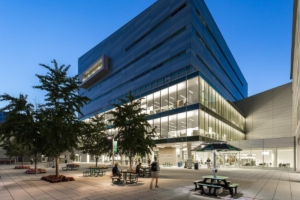
The 5th SNAS Interdisciplinary Research Conference will be held at Fuse at Mason Square, located in Arlington, Virginia, just minutes from Washington, D.C. Mason Square is George Mason University’s urban innovation campus, designed to foster collaboration among academia, industry, and government.
Fuse at Mason Square offers modern event spaces, advanced technology infrastructure, and collaborative environments that support interdisciplinary research and dialogue. Situated in one of the nation’s leading technology and policy corridors, the venue provides convenient access to public transportation, major airports, hotels, and local attractions.
We look forward to welcoming you to this dynamic setting for discussions on trustworthy innovation, learning, and human development in the age of intelligent systems.
Registration Fee and Payment:
Only registered attendees may participate in the conference. SNAS members with active memberships may present if their abstract/paper is accepted or attend the conference as an audience for a reduced fee.
- Non-Student Registration – $200
- SNAS Member Registration – $100
- Student Registration – $100
- Students from the Host Institution (GMU) – $50
SNAS Doctoral Research Grant:
SNAS invites applications for the SNAS Doctoral Research Grant, a $500 grant designed to support travel and lodging expenses for current U.S. doctoral students. To be considered for this award, applicants must submit a separate application to info@snascholars.org in addition to their regular conference submission.
Eligibility & Reimbursement Process: The award is contingent upon both the acceptance of the applicant’s abstract for presentation and the approval of their grant application. Award recipients must provide proof of student status and submit expense receipts for reimbursement. Reimbursement checks, up to $500, will be issued after the conference and may only be used for travel and lodging expenses. For inquiries or further details, please contact info@snascholars.org.
Hosted by