
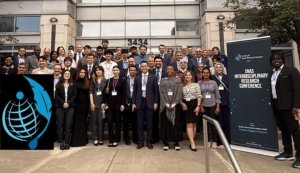
SNAS2026: Our Best Conference Yet?
The 5th SNAS Interdisciplinary Research Conference marked an exciting milestone in the growth of the Society of North American Scholars (SNAS). Hosted at George Mason University’s Mason Square campus in Arlington, Virginia, on October 9–10, 2026, this year’s conference brought together scholars and researchers to explore how intelligent systems are transforming innovation, learning, and human development.
With 99 abstract and short paper submissions, nearly double last year’s total, SNAS2026 demonstrated the growing interest in interdisciplinary scholarship and the value of creating spaces where researchers from different fields can exchange ideas, challenge assumptions, and develop new perspectives. Was this our best conference yet? The tremendous growth, inspiring keynote presentations, and new opportunities for emerging scholars certainly make a compelling case!
Investing in the Next Generation of Scholars
At SNAS, we believe that advancing scholarship means investing in the people who will shape its future. Supporting and mentoring doctoral students and early-career researchers is central to our mission, and SNAS2026 took meaningful steps forward in this direction. This year, 12 doctoral students received travel grants totaling $4,200, helping them participate in the conference, present their work, and connect with the broader academic community. These grants reflect our continued commitment to reducing barriers to participation and supporting the professional development of emerging scholars.
We also introduced poster sessions for the first time in SNAS conference history. Designed especially for student presenters and junior researchers, these sessions created an accessible environment for scholarly exchange, mentorship, and constructive feedback. The response was overwhelmingly positive, and the poster sessions quickly became one of the highlights of the conference. These initiatives reflect our continued commitment to nurturing the next generation of researchers and creating meaningful opportunities for professional development.
A conference of this scale is only possible through strong institutional partnerships. We extend our sincere thanks to Paulo Costa, PhD and the Department of Cybersecurity Engineering at George Mason University for hosting and supporting this year’s conference. Their partnership, hospitality, and commitment to interdisciplinary research helped make SNAS2026 a tremendous success. During his welcome remarks, Dr. Costa noted that interdisciplinary scholarship is embedded in the fabric of his department and is far more than a slogan or a simple phrase. That commitment was evident throughout the event, from the diversity of presentations to the meaningful conversations that occurred across disciplinary boundaries. Hosting the conference at Mason Square, in the heart of Northern Virginia’s technology and innovation ecosystem, also provided an especially fitting setting for discussions about intelligent systems, institutional transformation, and the future of higher education. We are deeply grateful for Mason’s support and collaboration.
The University, Reimagined
SNAS2026 featured two outstanding keynote speakers from George Mason University, each offering a distinctive perspective on how institutions can respond to technological change and build meaningful connections across disciplines and sectors.
Amarda Shehu, PhD, the Inaugural Vice President and Chief AI Officer and Associate Dean for Research at George Mason University, examined the university-wide adaptation and implementation of artificial intelligence initiatives, emphasizing that the implications of AI extend far beyond individual courses or academic departments. One notable example was the development of an AI-for-all course intended to support AI literacy across the university. Dr. Shehu, who previously served as a program director at the National Science Foundation (NSF), challenged institutions to think strategically about the pace and scope of their AI integration. Universities that respond too slowly risk falling behind the direction in which industries, employers, and society are moving. At the same time, meaningful adoption requires more than adding new technologies to existing structures. It calls for institution-wide transformation.
She also raised important questions about faculty evaluation and promotion, particularly the relationship between research quantity and quality. As AI changes the ways scholars conduct research and produce knowledge, traditional measures of academic productivity may need to evolve to better recognize meaningful contributions and scholarly impact. Her central message was clear: adapting to AI is not simply a matter of updating academic offerings. It requires universities to reconsider how they operate, evaluate scholarship, educate students, and fulfill their broader missions.
Liza Wilson Durant, PhD, Associate Provost for Strategic Initiatives and Community Engagement at George Mason University and Director of the Commonwealth Cyber Initiative (CCI) Northern Virginia Node, explored how universities can build productive partnerships with industry by understanding their institutional environments and developing strategies that reflect the opportunities and challenges around them. George Mason University offers a compelling example. Its proximity to technology company headquarters and federal government offices influences its research priorities, partnership opportunities, and approaches to generating resources. Rather than treating these relationships as isolated initiatives, the university develops strategies that connect its academic strengths with the needs of its surrounding ecosystem.
Dr. Durant highlighted the university’s new Fuse building as an example of how physical spaces can support this strategy. Designed to facilitate collaboration among educational institutions, industry partners, and other stakeholders, the building brings different parts of the innovation ecosystem into closer contact. From high school education and college learning to business activity and applied research, the goal is to create opportunities for interaction, collaboration, and shared impact. A powerful takeaway from her presentation was that physical space can become a manifestation of institutional strategy. The environments universities create can communicate their priorities, shape relationships, and make collaboration more natural and productive.
Together, the two keynote presentations offered complementary perspectives on institutional transformation. While Dr. Shehu focused on the university-wide implications of AI, Dr. Durant demonstrated how universities can position themselves within broader networks of innovation and collaboration. Both emphasized the importance of strategic thinking, institutional adaptation, and meaningful engagement beyond traditional boundaries.
Recognizing Outstanding Research
Recognizing promising scholarship has been a longstanding SNAS tradition. The society continued its Best Abstract Award and introduced a Best Poster Award for the first time in 2026. The 2026 Best Abstract Award went to Timothy McAliley of George Mason University for his submission:
“Fit for the Task? Educator Perceptions of FERPA Governance in the Age of Generative AI”
The work addresses an important and timely question at the intersection of education, privacy governance, and generative AI. As educational institutions increasingly adopt intelligent technologies, understanding how educators perceive and navigate existing governance frameworks is essential. SNAS also presented its inaugural Best Poster Award to Zunayeed Bin Zahir of George Mason University for:
“Towards Intelligent and Resilient GNSS Cybersecurity for Aviation: A Cross-Layer AI Framework”
The poster explored an important application of AI in cybersecurity and aviation, highlighting the potential of interdisciplinary approaches to address complex technological challenges. Congratulations to both award recipients for their contributions. We look forward to following the continued development and impact of their research.
SNAS is committed not only to creating opportunities for researchers to present their work but also to helping their scholarship reach broader audiences. Conference submissions underwent a double-blind peer-review process, supporting the conference’s commitment to scholarly quality and a fair evaluation of submitted work. In addition, SNAS will publish conference proceedings for presenters through George Mason University’s Mason Archival Repository Service (MARS). MARS is a repository service supported by Mason Publishing and the Data and Digital Scholarship Services (DDSS) at the George Mason University Libraries. Publishing the proceedings through this platform will provide a lasting record of the conference’s scholarly contributions and help make participating researchers’ work discoverable. It also reinforces our belief that a conference should be more than a two-day event: it should contribute to an ongoing exchange of ideas that continues long after participants return to their institutions.
Building on Our Momentum
SNAS2026 represented growth in a direction that matters. The increase in submissions demonstrated expanding interest in our community. The doctoral travel grants strengthened our commitment to supporting emerging scholars. The introduction of poster sessions created new opportunities for student engagement, while the keynote presentations underscored the importance of interdisciplinary thinking in addressing the challenges and opportunities of intelligent systems.
None of this progress happens in isolation. It reflects the collective efforts of our host institution, keynote speakers, presenters, reviewers, award recipients, doctoral students, volunteers, and the broader SNAS community. We are deeply grateful to everyone who contributed to making this year’s conference a success. As we look toward our next conference, we hope to build on this momentum, expand opportunities for scholarly exchange, and continue nurturing a community in which researchers from diverse disciplines and career stages can learn from one another and make meaningful contributions.
Thank you for being part of the SNAS journey. We look forward to welcoming you to our next conference!
Until then, stay curious and stay connected.
Omer Topaloglu, PhD
VP of Communications (2024–2027)
President (2021–2024)
Society of North American Scholars (SNAS)